
When customers ask us what EVA foam hardness they should use for making slippers, my first question is usually: What kind of slippers are you planning to make?
A simple bathroom slipper and a thick platform slipper may require very different materials. Even when both are made from EVA foam, the right hardness and thickness depend on the sole design, intended comfort, and how the material will be processed.
Here are a few practical considerations based on our experience working with EVA foam materials at Guowei EVA.
Thin Bathroom Slippers: One EVA Grade May Be Enough
For simple bathroom slippers with relatively thin soles, around 10 mm can be a useful starting point for the finished sole thickness.
These slippers do not necessarily require several layers of different materials. A single EVA foam grade may be sufficient, depending on the design.
For example, a softer EVA material around 30 Shore C could be worth testing when comfort and flexibility are priorities.
However, softer does not automatically mean better. The material must also provide acceptable shape retention, durability, and stability in the finished slipper.
For bathroom applications, wet-floor grip is especially important. This should be evaluated on the actual finished outsole, including its tread pattern and surface conditions, rather than assumed from EVA hardness alone.
Thicker Slippers: Consider Different Hardness Levels
For thicker slippers or platform-style soles, I generally approach material selection differently.
The bottom part of the sole needs enough firmness to maintain its shape and provide support. A firmer EVA grade, potentially around 60 Shore C, could be considered for initial trials.
The surface closer to the foot may benefit from a softer material to provide a more comfortable feel.
This does not mean every thick slipper needs a 60 Shore C outsole or a multilayer construction. The correct combination depends on the design, the foam's density and resilience, and the performance expected from the finished product.
The important point is to evaluate the different parts of the sole separately instead of assuming that one hardness will work equally well throughout the construction.
Building Thicker Soles Through EVA Lamination
Another option for thick or platform-style slippers is to bond several EVA foam sheets together.
Lamination allows manufacturers to combine different thicknesses and hardness levels. For example, a firmer supporting layer can be combined with a softer upper layer.
This can offer more flexibility in sole design, but it also adds another processing step.
Bonding quality, material compatibility, and the ability of the finished sole to withstand repeated flexing should all be evaluated before mass production.
Hardness Is Important, but It Is Not Everything
One mistake I would avoid is choosing EVA foam based only on its Shore C hardness.
Two materials with similar hardness readings may still feel different because of differences in density, foam structure, resilience, and finished thickness.
For slipper manufacturing, it is worth considering:
- Shore C hardness and the intended feel
- Finished sole thickness and construction
- Foam density and cushioning behavior
- Shape retention after repeated use
- Outsole wear resistance and grip
- Bonding quality if multiple layers are used
Hardness provides a useful starting point, but the finished slipper needs to be evaluated as a complete product.
Test Different EVA Samples Before Bulk Purchasing
For manufacturers developing a new slipper design, I recommend comparing a few material samples before committing to a large order.
Depending on the project, this might involve softer grades around 30 Shore C, common intermediate options such as 38 or 45 Shore C, or firmer materials closer to 60 Shore C.
There is no need to test every hardness available. Start with a small number of candidates that match the intended construction.
Whenever possible, compare samples at the same finished thickness and test them in the actual slipper design.
Comfort, flexibility, durability, and shape retention after repeated wear are more meaningful than judging an unprocessed foam sheet by hand.
EVA Foam Materials from Guowei EVA
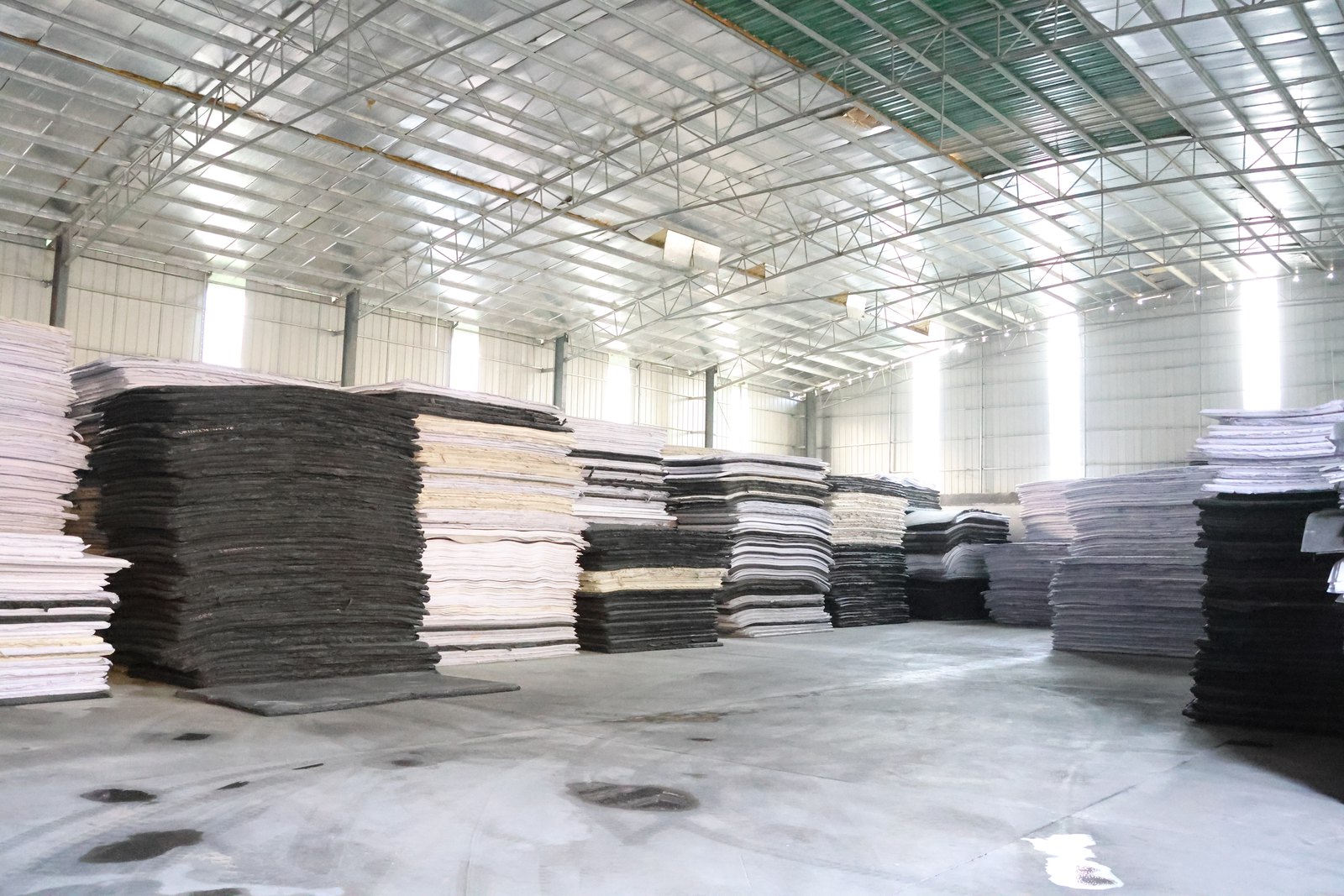
At Guowei EVA, we manufacture EVA foam sheets and large-format slabs for footwear manufacturers and other downstream processors.
Our standard large slab reference is 3000 × 1500 × 60 mm. Common hardness options include 38 and 45 Shore C, with other hardness requirements available for discussion and production confirmation.
Depending on the order, we can also coordinate additional processing services, such as thickness splitting, cutting, and lamination, through our production and processing arrangements.
We focus on supplying suitable EVA materials and helping customers plan the specifications needed for their subsequent manufacturing processes.
If you are developing EVA slippers, sharing the intended sole thickness, hardness preference, and construction can help us discuss a suitable material direction.
Frequently Asked Questions
What EVA hardness is suitable for bathroom slippers?
Around 30 Shore C can be one possible starting point for softer, simple bathroom slippers. However, the final material should be selected after evaluating comfort, durability, shape retention, and wet-floor grip in the actual slipper design.
Is 60 Shore C EVA always better for slipper outsoles?
No. A firmer material around 60 Shore C may be worth testing for certain supporting layers, but it is not a universal outsole requirement. Sole geometry, foam properties, intended use, and finished-product testing are all important.
Should thick EVA slippers use multiple hardness levels?
Not necessarily. Some designs work with a single material, while others benefit from combining softer and firmer EVA layers. Sampling and testing should determine whether lamination adds practical value.
Can EVA foam sheets be split and laminated for slipper production?
Yes. EVA foam slabs can be processed into thinner sheets and, where suitable, bonded into multilayer constructions. Actual splitting thickness, bonding method, processing feasibility, and service scope should be confirmed for the order.